
The investment in a dental press furnace — one of the most precise and technically sophisticated pieces of equipment in the modern dental laboratory — represents a significant capital commitment that the laboratory expects to recover through many years of productive pressing cycles. Maximising the return on this investment requires not only correct furnace maintenance and calibration but the consistent use of quality consumable components that allow the furnace’s mechanical and thermal precision to be fully realised in the pressing result. The Plunger is the most mechanically critical of these consumable components — the interface between the furnace’s pressing mechanism and the ceramic ingot — and its quality directly determines whether the furnace’s precisely controlled pressing cycle produces the consistent, accurate results that justify the capital investment.
Understanding the relationship between plunger quality and press ingot performance is essential for dental laboratory quality management. Press ingots — including lithium disilicate and leucite-reinforced ceramics — require the application of a precisely controlled pressure during the pressing phase to flow uniformly into the investment mold cavity. If the plunger’s pressing face is not perfectly flat and perpendicular to the furnace’s pressing axis, the pressure applied to the ingot is not uniform across its cross-section, creating differential flow that produces restoration dimensional variations. Aite Dental’s plungers are precision-ground on both end faces to a flatness tolerance of better than 0.05mm and a perpendicularity tolerance of better than 0.1° relative to the plunger’s long axis — specifications that ensure the pressure applied to the ingot during pressing is uniform and axial, producing the consistent mold filling that quality pressed restorations require.
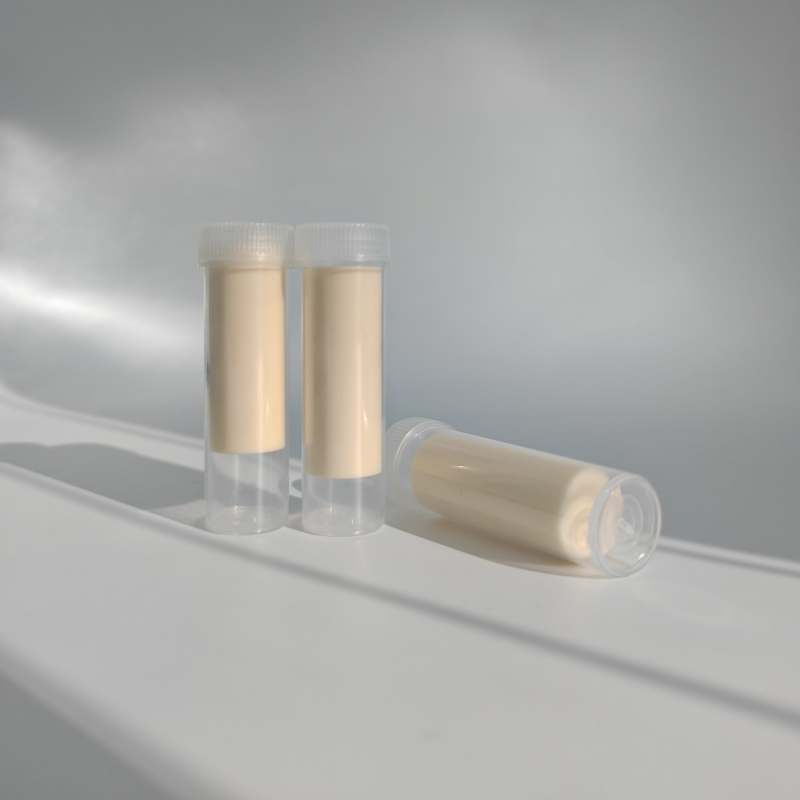
Thermal Shock Resistance in Dental Press Plungers
Every pressing cycle subjects the plunger to a rapid thermal cycle: from room temperature during loading, to pressing temperature (approximately 850–1,100°C depending on ceramic material) during the pressing phase, and back toward room temperature during the post-pressing cooling period. This rapid thermal cycling creates differential expansion stresses within the plunger material — stresses that, if the material lacks adequate thermal shock resistance, initiate micro-cracks that progressively weaken the plunger over successive pressing cycles until catastrophic fracture eventually occurs. The thermal shock resistance of alumina ceramic is significantly better than that of many alternative ceramic materials, and Aite Dental’s plunger formulation uses a controlled alumina grain size and firing profile that optimises the material’s thermal shock resistance specifically for the dental pressing temperature range. This optimisation reflects the company’s understanding that the plunger must reliably withstand the thermal cycling of daily production use over its entire specified service life without sudden failure that could damage the furnace muffle or create a hazardous situation during furnace operation.
The Complete Press Workflow: Plunger, Ingot, and Firing Pad Working Together
The highest-quality pressing results are achieved when all components of the pressing workflow — the plunger, the ceramic ingot, and the firing pad — are quality-matched and workflow-compatible. Aite Dental’s product range addresses this system-level quality requirement by providing all three components within a single, integrated quality management framework: plungers with dimensional specifications validated for compatibility with standard press furnace models, press ingots with material formulations calibrated for the pressing temperatures and pressures that those furnace models deliver, and firing pads with thermal and surface properties appropriate for the firing temperatures and restoration types being processed. When all three components are correctly specified and in good condition, the pressing workflow operates at its highest level of consistency and predictability — producing restorations that emerge from the press with minimal dimensional deviation from the wax-up, clean surfaces that require minimal finishing, and the material properties needed for successful downstream processing through crystallisation, staining, and glazing.